Objects of Desire
A submarine in the cloister: Milan’s great machines on show
A submarine, a sailing ship in 90 pieces, a liner’s bridge, Leonardo’s machines and a 1930 sky.
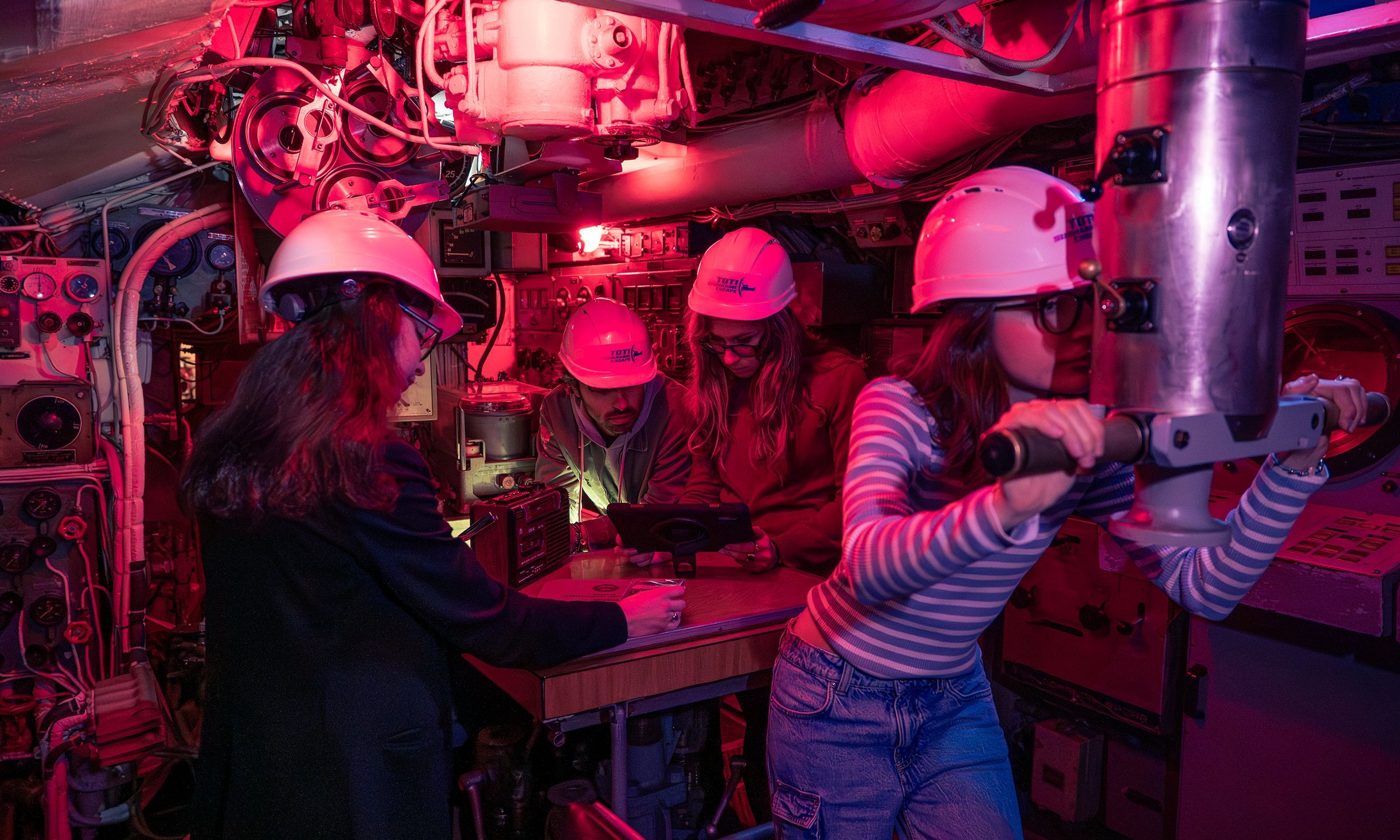
Photo Credit
Image courtesy of © Museo Nazionale Scienza e Tecnologia Leonardo da VinciMilan keeps its great machines in unlikely places: a submarine in a Renaissance monastery, the bridge of an ocean liner a long way from the sea, Leonardo’s inventions beside the Galleria and a 1930 planetarium in the public gardens. The question is why a city with no coast collects ships. The answer says a good deal about how Milan sees itself: as the place where things are made, whatever they are made for.
The monastery that took a submarine
The Museo Nazionale Scienza e Tecnologia Leonardo da Vinci opened on 15 February 1953 in the former Olivetan monastery of San Vittore al Corpo, with an exhibition on Leonardo’s science and technology. Cloisters, it turned out, make excellent hangars. In 1964 the museum added its Padiglione Aeronavale, the pavilion for things that fly and float.
Its most improbable guest arrived at 6.30am on 14 August 2005. The submarine Enrico Toti, S506, launched on 12 March 1967 and 46.2 metres long overall, reached the museum after a 93-kilometre journey by road, in the August week when Milan is at its emptiest. The museum’s own photographs show visitors in its control room in hard hats, which is as close to a dive as the Lombard plain allows.
Ninety pieces of a ship
The Toti is not the museum’s only seagoing exhibit. The Ebe, a sailing cargo ship of 1921 that later became a training ship, was cut into 90 pieces and moved on 25 lorries, then put back together indoors. Nearby stands the bridge of the liner Conte Biancamano, three storeys and about 16 metres high, brought from La Spezia after the ship was scrapped in 1960–61.
The question these exhibits answer is why an inland city bothered. The museum’s answer is in its name and its first show: technology as a continuation of Leonardo’s notebooks, and the city as the workshop that builds what other places merely sail.
There is a practical lesson in it, too. Moving a submarine 93 kilometres by road, or a sailing ship in 90 pieces, is an engineering project in itself, and the museum treats the journeys as part of the exhibit. In Milan the logistics are the show; the city has never quite believed in admiring something without asking how it got there, and how it might be done better.
Leonardo, rebuilt
Milan still likes to show Leonardo’s workings. At the Leonardo3 Museum, on Piazza della Scala at the Galleria entrance, a museum entirely devoted to him displays working models of his machines and digital restorations, from the mechanical lion to the Last Supper. In October 2026 its Galleria entrance was being dismantled, so check its own pages before you go.
Cloisters, it turned out, make excellent hangars.
A sky from 1930
In the Giardini Indro Montanelli, the Civico Planetario Ulrico Hoepli has projected the night sky since 1930. The regional heritage record says the publisher Ulrico Hoepli gave it to the city and Piero Portaluppi, also the architect of Villa Necchi Campiglio, designed it. Under a dome nearly 20 metres across, over 300 seats face a Zeiss projector installed in 1968.
It is also one of the few places in Milan where the stars are guaranteed to appear on time. LOfficina, which runs it, publishes the programme of shows and talks online, and they do sell out.
Taken together, the four make a neat argument. Leonardo drew the machines, the science museum collected the ones the twentieth century actually built, and the planetarium put the sky under a Milanese roof. Each is a reminder that the city of fashion was a city of engineers first.
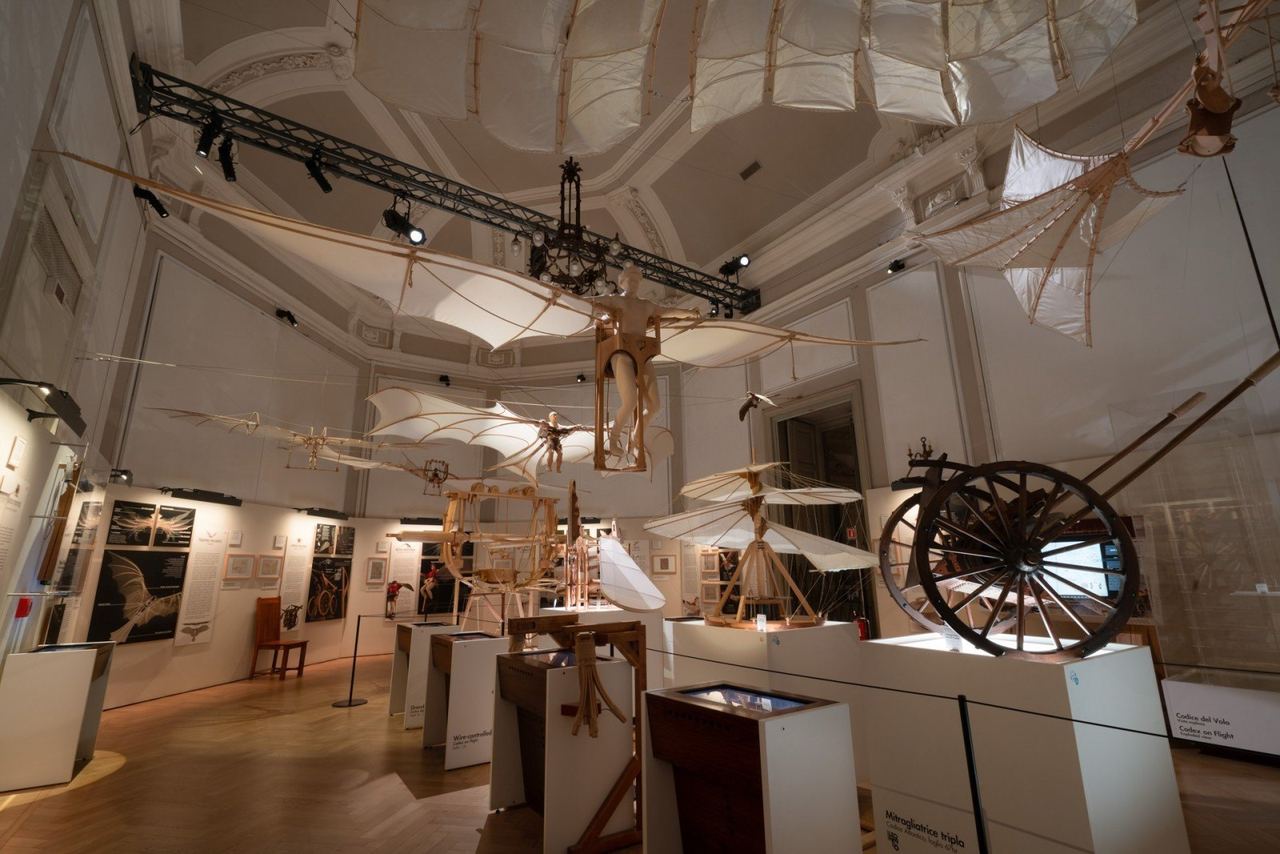
Photo Credit
Image courtesy of © Leonardo3 MuseumThe gadgets, elsewhere
Our Tech list covers the modern kit: phones, laptops, earbuds and what is worth packing. These are the machines that cannot be bought, only visited. Our advice: give the science museum half a day, check its site for submarine visits when you buy your ticket, and pair the planetarium with an evening walk through the Giardini Montanelli. A city of engineers is best seen through its gear.
Why it's on our list
- The monastery that took a submarine
- Ninety pieces of a ship
- Leonardo, rebuilt
- A sky from 1930
Location
The map comes from Google Maps, which sets its own cookies once it loads.
More in depth
 Objects of DesireEight hundred trees and a pool of well water: Milan at homeThe Bosco Verticale, Porta Nuova’s library of trees and Portaluppi’s Villa Necchi Campiglio.
 Objects of DesireThirty millilitres each: Milan and the Negroni familyCampari’s seltz on tap, the Americano and Negroni as the IBA writes them, and Bar Basso’s Sbagliato.
 Objects of DesireLess parked than crouched: the electric Jaguar and the new supercarsJaguar’s Type 00 and Type 01, Ferrari’s first electric car and the record-breakers around them.